
Not every career transition begins with a clear plan.
Over the past months, I had been exploring opportunities to return to a full-time role in architecture and project management. After many years working in the built environment, it felt like a natural step to re-enter that space.
But as the Dutch saying goes, “Als de ene deur sluit, gaat er een andere open.” — when one door closes, another opens.
In my case, that new door appeared in a very different form: teaching as a yoga instructor and mindfulness facilitator.
What began as a temporary shift has slowly grown into something more meaningful. Working with professionals in the Brainport region, in the Netherlands has brought back memories of an earlier chapter in my career, a time when I was living and working in Singapore and navigating my own experience with burnout.
At the time, my curiosity about the connection between mind and body started quietly.
Like many professionals working in fast-paced environments, I was deeply engaged in my work. Long hours, constant deadlines, and the pressure to perform were simply part of the rhythm of the industry. It was rewarding in many ways, but over time I began to notice the subtle signs of exhaustion that often go unnoticed in high-performing workplaces.
Yoga initially entered my life as a personal way to manage stress and regain some balance. What began as a simple practice gradually deepened. I started exploring not only the physical postures, but also the philosophy behind the practice… ideas around awareness, resilience, and the way our mental and physical states influence one another.
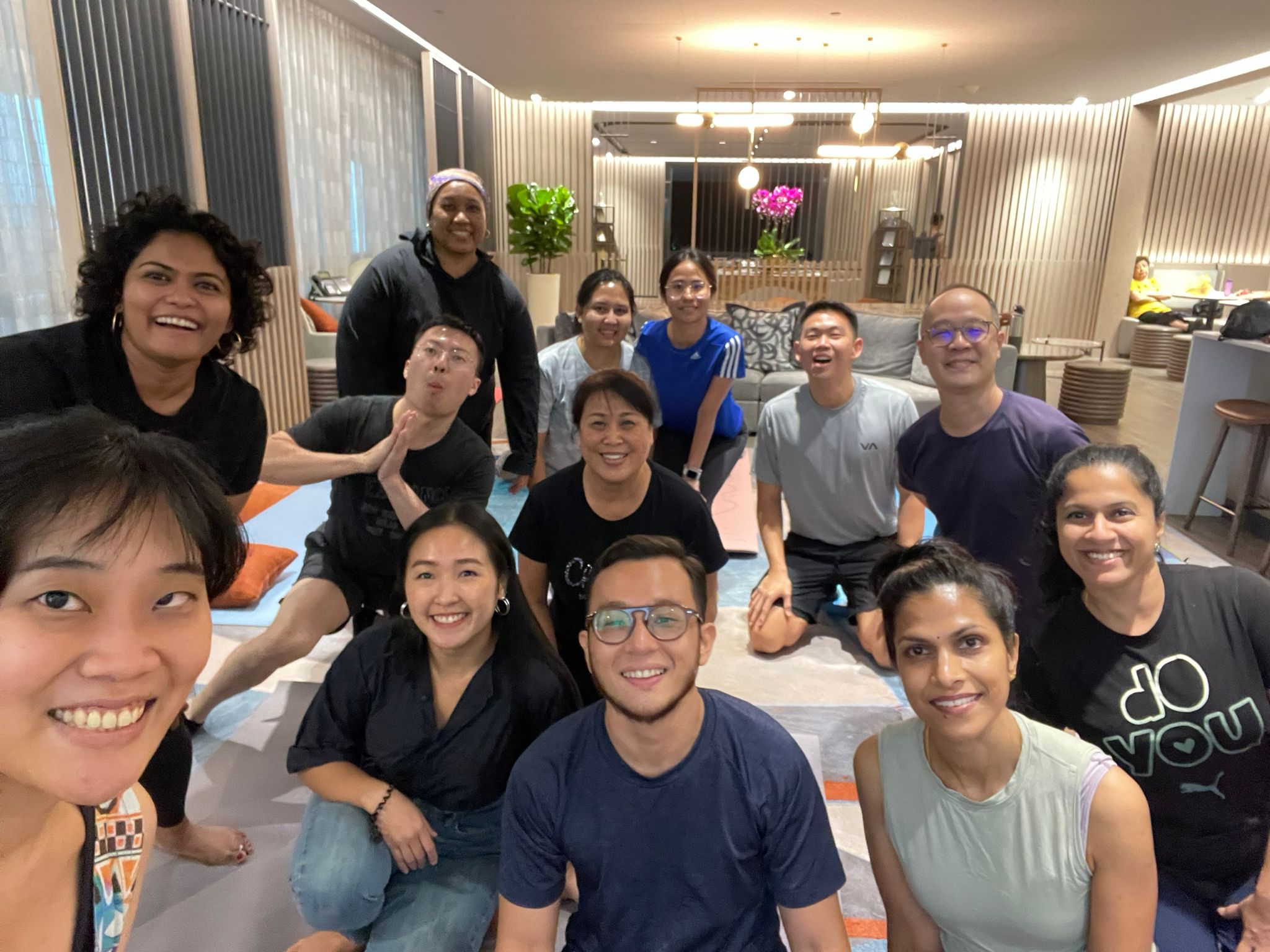
Eventually, I began sharing short, informal yoga sessions with colleagues in the office after work. There was nothing particularly structured about it at the time. It was simply a group of people stepping away from their desks for an hour to stretch, breathe, and reset after long days of meetings and deadlines.
Looking back, those small sessions were the first seeds of something much larger.
What started as a personal exploration gradually turned into a journey studying yoga more deeply, not only the physical practice, but also its philosophy, meditation, and the broader frameworks that explore how we relate to stress, attention, and wellbeing.
At the time, I never imagined that these experiences would eventually shape a new professional path.
And yet, years later, here I am again working with professionals — but now in a different capacity.
Today, through workshops, conversations, and guided practices, I work with individuals and teams who are navigating many of the same pressures that I once experienced myself: demanding workloads, high expectations, and the constant challenge of maintaining energy and focus over the long term.
This is where another Dutch saying comes to mind: “Je moet soms een stap terug doen om vooruit te komen.”
Sometimes you need to take a step back in order to move forward.
In many careers, stepping back is often interpreted as failure. A pause, a delay, or a deviation from the “expected” path. But in reality, those moments of pause are often where the most important shifts begin.
Stepping back creates space to reflect. It allows us to reassess what matters.
And sometimes it reveals new directions we might never have considered otherwise.
What once felt like a detour in my own career now feels more like a bridge, connecting my earlier work in architecture and project management with my current work around resilience, wellbeing, and sustainable performance.
In many ways, the two worlds are not so different after all.
Architecture is about designing environments where people can function, interact, and thrive.
And wellbeing work is not unlike that, it is about helping people build the internal structures that allow them to sustain energy, clarity, and resilience over time.
Looking back, the path makes more sense than it did while I was walking it.
But perhaps that’s often the nature of meaningful transitions: we only understand their direction in hindsight.