
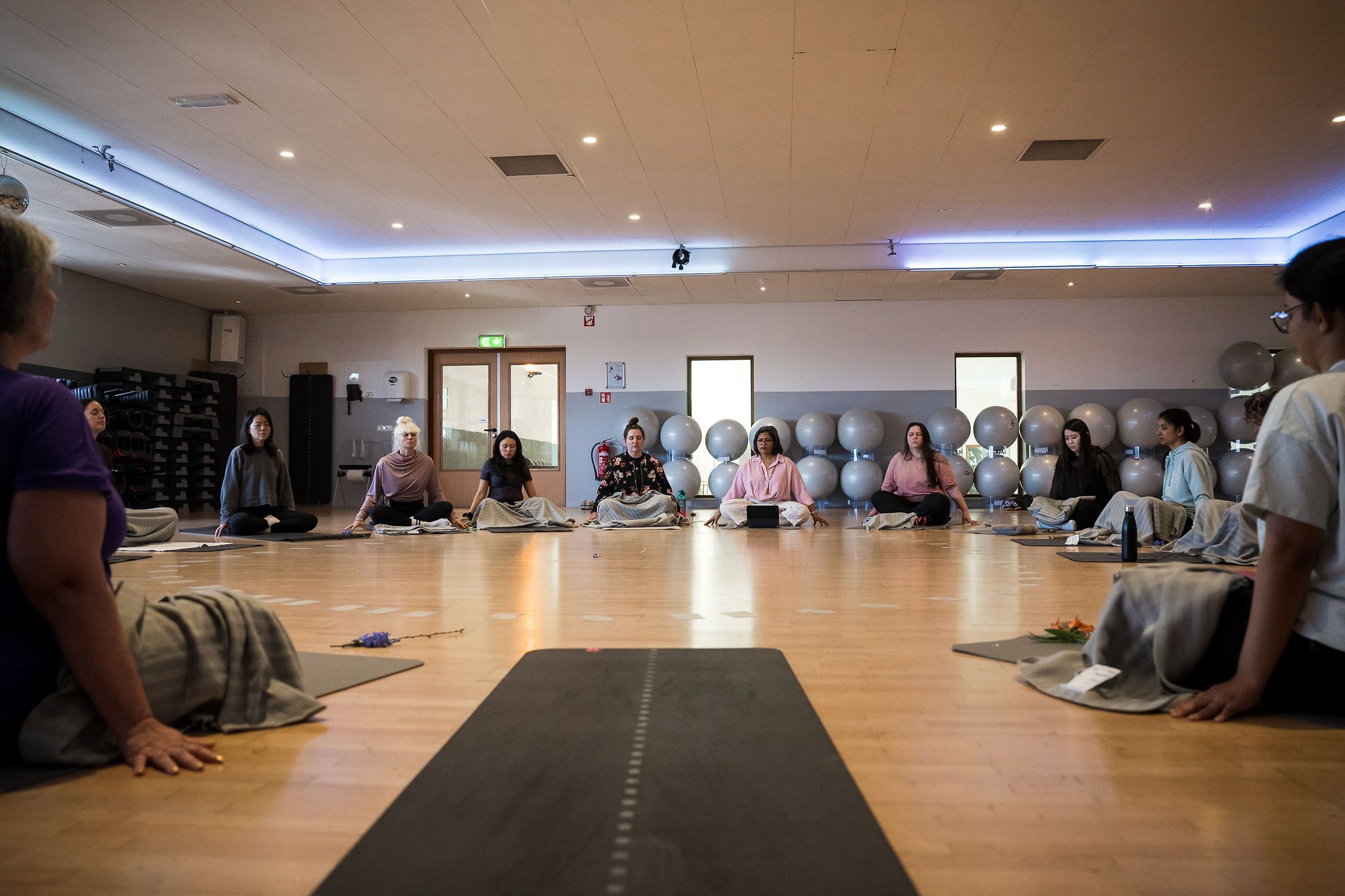
On Sunday I designed and facilitated an International Women’s Day workshop at David Lloyd Eindhoven, bringing together a group of women to explore the connection between women’s health, stress, and sustainable wellbeing.
International Women’s Day often focuses on leadership, opportunity, and gender equality. Yet an equally important conversation is how women can sustain their health, energy, and resilience while navigating the many demands of modern life.
This workshop created space to explore that connection through education, discussion, and restorative practice.
Understanding Women’s Hormonal Rhythms
We began the session by exploring the foundations of women’s health and physiology, focusing on hormonal cycles and how they influence daily life.
Unlike the relatively stable hormonal patterns seen in men, women experience natural cyclical fluctuations that can affect energy levels, focus, mood, sleep, and stress resilience.

Across different stages of life — including menstruation, fertility years, perimenopause, and menopause — these rhythms evolve. Understanding them can offer valuable insight into why productivity, concentration, or emotional capacity may vary throughout the month.
Rather than viewing these fluctuations as a limitation, they can be understood as biological rhythms that provide useful information about when to push forward and when to prioritise recovery.
This awareness is increasingly relevant in conversations around workplace wellbeing and sustainable performance, particularly for women balancing professional responsibilities alongside personal and family commitments.
The Impact of Chronic Stress on the Nervous System

The discussion then moved toward the physiology of chronic stress and burnout.
Many professionals today operate in environments that reward constant productivity and responsiveness. As a result, the body’s stress response system can remain activated for prolonged periods.
This activates the sympathetic nervous system, commonly known as the fight-or-flight response.
While this response is essential for short-term survival, remaining in this state over long periods can lead to significant physical and mental strain. Chronic stress can contribute to fatigue, sleep disturbances, cognitive overload, anxiety, and eventually burnout.
One of the key insights from the workshop was that stress regulation is a skill that can be learned.
By activating the parasympathetic nervous system, the body’s rest-and-recovery mode, we can support recovery, emotional balance, and long-term resilience.
The Benefits of Yoga Nidra for Deep Rest

Following the discussion, participants experienced a guided Yoga Nidra practice.
Often referred to as “yogic sleep,” Yoga Nidra is a powerful relaxation technique that allows the body to enter a deeply restorative state while the mind remains gently aware.
Research and experience increasingly show that Yoga Nidra can help reduce stress, support nervous system regulation, improve sleep quality, and promote mental clarity.
For many participants, the practice offered a rare opportunity to experience true rest in a structured and supportive environment.
In modern lifestyles where constant activity is often valued over recovery, creating intentional space for deep rest can be transformative.

Closing with Reflection and Connection
The session closed with a light-hearted moment of reflection through oracle card readings.
These small rituals create space for curiosity, intuition, and conversation. They also provided a relaxed and meaningful way to conclude the workshop, allowing participants to leave with something personal to reflect on.
Why Women’s Wellbeing Matters for Sustainable Performance
Workshops like this highlight an important reality: wellbeing and performance are deeply connected.
When people understand their bodies and have tools to regulate stress, they are better equipped to maintain energy, focus, and resilience over time.
As conversations around workplace wellbeing, burnout prevention, and resilience continue to grow, integrating knowledge about women’s health and nervous system regulation becomes increasingly important.
International Women’s Day provides a powerful moment to start these conversations, but supporting women’s health and wellbeing is something that deserves attention every day of the year.